The people walking in darkness
have seen a great light;
on those living in the land of the shadow of death
a light has dawned.

Merry Christmas, everyone!
The people walking in darkness
have seen a great light;
on those living in the land of the shadow of death
a light has dawned.
Merry Christmas, everyone!
Tonight I just finished the first draft of a short story. Yeah!
Okay, that’s not such a big deal, since I’ve finished the first drafts of lots of stories, but this is the first one I’ve pulled off in a while. I spent most of the first part of this year writing a novel, then I took a brief break from writing, and the two stories I tried to finish after that just didn’t work out. But this one turned out well.
Granted, it’s a total mess right now, with terrible pacing, a nonsensical conclusion, and some heavyhanded speechifying in the middle. But: it’s a first draft. And it’s done.
So remember my novella whose rights reverted to me? The one that I promised would be re-released with a new cover and a new title?
Well I’m proud to present to you:
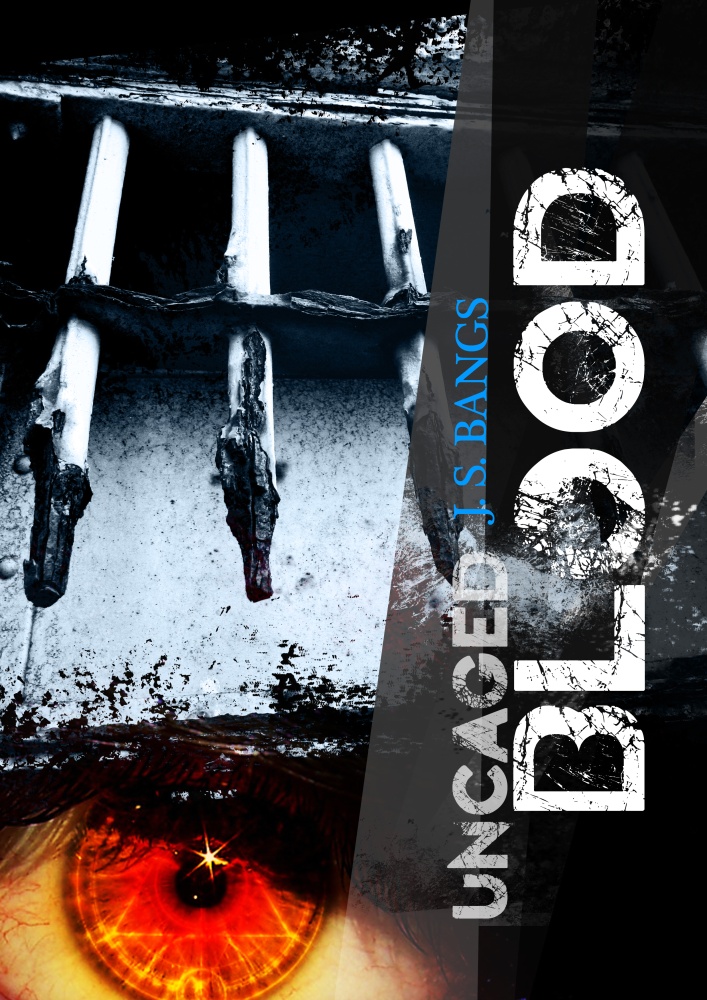
Read an excerpt and find links to buy here.
The new cover is SO MUCH BETTER than the old cover. The design and layout must be credited to Nathan Gramesc of Deluxe Photography, a photographer, web designer, and Level 9 Photoshop Mage, who managed to wring the beauty shown above out of the pile of “interesting prison pics” that I threw at him.
And the title has been freed from its, shall we say, unfortunate polysemy.
I’m extremely happy with the way this turned out. It’s the first thing I’ve self-published and it probably will not be the last.
Foreigners visiting Romania often worry about health hazards implicit in visiting what was until fairly recently a Communist dictatorship. I tell them not to worry about it, since in the cities the water and food are all perfectly clean by European and American standards. However, there is a serious health hazard that stalks Romania, one which foreigners rarely think of. If the reports are true, then this epidemic is responsible for numerous illnesses, hospitalizations, and even deaths. It is little publicized in official sources, but nearly any Romanian on the street will be able to tell you all about it.
I’m talking about curent.
Curent in this context means "draft", as in a drafty door, or opening a window to let in a draft. People from outside Romania may believe that a draft is a nuisance (if you’re cold) or a welcome relief (if you’re too warm), but the Romanians will set you straight. If you catch a draft, you are in mortal peril.
The early symptoms of catching a draft include a headache, toothache, soreness of the neck, stiff joints, stuffy nose, sore throat, coughing, or sneezing. If untreated, the draft will continue to worm its way into your system and metastasize into pneumonia, arthritis, polio, and dementia. People have died from catching drafts. Especially vulnerable are the elderly and small children, which is why members of both demographics are traditionally dressed in the warmest clothes that they can find all through the summer—the best defense against the draft is a set of wool stockings and a scarf, even if it’s 40 C outside.
I had been in Romania for a while and heard about curent a few times, but the true seriousness of curent only struck me when the summer began. At the school where I was teaching I wandered into the kitchen, where a group of six women were preparing a meal for some guests. It was hot outside, and several pots of boiling water were on the burners around the kitchen, turning the crowded little kitchen into a sweltering sauna. After a few minutes I went over and opened the window, only to be immediately shouted down by the women. I was letting in a draft.
But weren’t they hot? Indeed they were, and I could see the sweat and discomfort on several of their faces. But the health dangers of cool moving air were far too great to risk for mere comfort.
I observed similar things on several other occasions. On crowded public buses during the summer heat, any attempt to open a window would be countered by immediate protestations about the draft. Friends and neighbors would close the windows of my room for me if they noticed them open, to protect me from the draft’s depredations. I heard a young woman complaining of a persistent headache and nausea which was blamed on sleeping with her head too close to her computer’s exhaust fan. It was a small draft, but it was enough.
Curiously, a draft’s lethality seems to be greatly reduced outside of Romania, to the point where many foreigners don’t concern themselves with it at all, and even claim to enjoy having a window open on a warm day. That doesn’t mean that it’s not real, however. Indeed, it’s as real as Korean Fan Death, another silent killer whose victims lie largely in a single country.
Don’t say I didn’t warn you.
I think I have a cover for The Taint — which is no longer called The Taint, by the way. Look for Exciting Revelations to appear here soon.
A few weeks ago I released phonix 0.8, the latest version of my phonological modeling language. And now that you’ve read the previous sentence, assuming you haven’t already clicked away in boredom, I hear you saying What the heck is a phonological modeling language?
Let me explain. No, let me sum up.
Languages change their sounds over time: Spanish and French have different sounds than Latin, and different sounds from each other. However, there are regular correspondences between the Latin sounds in a word and the resulting sounds in Spanish, and with a good set of rules you can generate Spanish words from Latin ones. However, to do this you need a model of the sounds in Latin and how they relate to each other, and a set of rules that describes how those sounds change over time and what the conditions are for turning one sound into another. This is what phonix does: it defines a special notation for describing a language’s sound system and the rules which apply to that system, then it allows you to apply those rules to lists of words.
All of this demonstrates that I’m a huge language nerd. I majored in Linguistics in college, and I was (as one under-motivated classmate said) "one of those people who reads linguistics books in their spare time". As a language nerd I spend an inordinate amount of time thinking about the languages used in my stories. And sometimes I think I’m the only one, since most fantasy and science fiction writing sucks a big one one this.
I feel a rant coming on.
Here they are, in decreasing order of fail:
The problem with this model is that if the language has changed enough that the older form is incomprehensible, then unless the language community is very small the language should also have split into multiple daughter languages.
This is a lot better than option #1, but it contains the problematic assumption that countries only contain one language. Americans, in particular, seem to fall into this assumption because we’re used to our vast, linguistically homogeneous country. But the majority of the countries in the world are home to multiple, mutually unintelligible language groups, and often dozens or hundreds of such groups. In a pre-modern setting, our protagonist should fine that the local vernacular becomes incomprehensible as soon as he’s traveled more than a few days from his house.
This is tolerable, and it’s this approach that’s taken by Tolkein and those of his followers who bothered to care. There is often something of a handwave to this explanation—the author has posited this in order to avoid having to actually think about the languages in their setting too deeply—but at least it’s superficially plausible and has historical precedent.
I actually don’t know any published authors in this category. Mark Rosenfeld has done amazing work in documenting his world of Almea, but alas he’s never been published. Such is the fate of many a conlanger.
So now you’re depressed. Your options are to write about language in your setting badly, or to spend years and years elaborating something that most readers don’t care about anyway.
Pretend that it doesn’t exist. I read an interesting article the other day about how language is handled—or, more accurately, isn’t handled—in the Magic: the Gathering tie-in novels. (Scroll down to the "Letter of the Week" to see the discussion.) A letter asked how characters from different planes of the Multiverse can talk to each other without needing to learn a foreign language, and the author responded quite directly with "just ignore that":
The risk is over-explaining. To use a Star Trek example again, this time in a negative way—it’s like the episode where they explain why all the humanoid races on the show all basically look alike. Ugh. It’s one thing to poke fun at the show’s makeup budget and do armchair xenobiological critiques of how the aliens resemble each other so much, but it’s quite another to expect the show to provide an in-universe explanation of those budgetary or story-based limitations. Either you didn’t think it was a problem before and now this explanation throws an awkward spotlight on it, which diminishes your enjoyment of the formula, or you did think it was a problem but you had learned to live with it but now suddenly you have to live with the show’s one groan-worthy and set-in-stone explanation forever.
An explanation like "Well, everybody across the Multiverse happens to speak the same language because a long time ago blahblahblah" or "Well, all planeswalkers find that they can communicate just fine because the spark blahblahblah" may ultimately cause more problems than it fixes. It might actually reduce enjoyment to patch over one of those weird, load-bearing plot-holes that are kinda ugly but that make the fantasy genre possible.
Though it makes me want to cry a little, this guy has a really good point. No amount of world-building will cover everything. And if you don’t have the skills or the patience to make the languages, why bother? More importantly, if your story doesn’t need the linguistic detail, then maybe you should just leave it out.
We all have our obsessions. I’ll be using phonix to apply the sound changes for deriving Prasi from Old Tzingrizil. And I’ll be having a great time of it, even if no-one cares.
I never get tired of talking about Tolkien. And occasionally I see something really great, which I really have to share. Behold, Alan Jacobs taking on a common, but misguided criticism of Tolkien.
It has just become the tale that middle-to-highbrow critics tell — ever since Edmund Wilson was saying his own manifestly untrue things about Tolkien in the New Yorker fifty years ago — that Tolkien’s fictional world is morally simplistic and rigidly Manichaean. It may be true that the story of the Ring is less morally ambiguous than the average realistic novel, but that’s primarily because Tolkien wasn’t especially interested in the problem of knowing right from wrong. His concern was to explore the psychology of the moment when you know right from wrong but aren’t sure whether you have the courage and fortitude to do the right thing.
Modern liberalism likes to think that all our problems are epistemological: we are afflicted by never knowing with sufficient clarity what we ought to do. Our fictions tend to reflect that assumption. Tolkien, not being a modern liberal, thought it more interesting to explore situations when people know what they need to know but may lack the strength of will to act on that knowledge. He might say, and with some justification, that contemporary literary fiction is not simplistic in regard to such problems but oblivious to them.
Forgive me, Alan, for quoting about half of your article. It was too good to omit anything.

Shogun by James Clavell
My rating: 4 of 5 stars
This book is ostensibly the story of John Blackthorne, an Englishman piloting of a Dutch sailing ship which is attempting to circumnavigate the globe in 1600. Their ship runs aground before a storm in a village on the east coast of Japan, and from there Blackthorne and the rest of the Dutch crew are quickly caught up in the fractious, Byzantine politics of feudal Japan.
I say that the book is “ostensibly” about Blackthorne, because while the book begins with his POV and follows most of his adventures, the center of the story and the driver of the plot is Toranaga, the Japanese daimyo who takes Blackthorne into his care and implicates him into his drive to become Shogun, the supreme military leader of japan.
The character of Toranaga is a masterful creation: a political genius, a master of the double- and triple-cross, always a step ahead of his rivals, playing the chess game of Japanese feudal politics with awe-inspiring brilliance. At the beginning of the novel he faces a political crisis as the other leading daimyos of Japan correctly see him as the greatest threat, and have banded together to eliminate him or drive him to seppuku. As the novel progresses things apparently go from bad to worse as Toranaga’s enemies multiply and his resources dwindle—yet he repeatedly escapes from apparently invincible traps and turns disasters into victories. At the same time, Clavell paints Toranaga as an enlightened, humanistic, and sympathetic ruler, the sort of man who deserves to establish a dynasty lasting centuries.
While Toranaga is undoubtedly the book’s center, the numerous secondary characters fill out Clavell’s depiction of feudal Japan. Blackthorne advises Toranaga in the use of muskets, providing a crucial element in his military plans, all the while pursuing a doomed romance with the Lady Mariko Toda. We meet a variety of other Japanese nobles, Toranaga’s allies and enemies, who are variously craven, cruel, and courageous. Other characters include Japanese peasants and courtesans, Portuguese traders and sailors, and Jesuit missionaries working to preserve the Church and its lucrative trade routes. The resulting tapestry, involving religious and political rivalries stretching across Europe, Asia, and the Americas, is extremely complex, but is introduced in a way that makes it easy to understand and follow.
Of course, my biggest question after finishing such an enormous historical epic is How accurate is all of this? After doing a little bit of research, I’m pleased to say that the book generally seems to hold up. Toranaga is based pretty closely on Tokugawa Ieyasu, who founded the Tokugawa Shogunate that lasted until the mid-19th century. The story of John Blackthorne is based on the life of William Adams. Clavell’s telling certains contains its embellishments and anachronisms, but the core narrative is historical, and the depiction of feudal Japan seems to be remarkably accurate.
If you’re looking for a long (and I do mean long) immersive read, or a friendly way to introduce yourself to a crucial time in Japanese history, I recommend this highly.
We’ve been sick in my house.
It began with the littlest, who spent one restless night being tormented by vomiting and diarrhea. The next day he seemed to be better, but when the afternoon rolled around we found that our other son had thrown up during his nap, and was curled up shivering on the floor and whimpering. He spent the next several hours being cradled in my arms and vomiting periodically, finally perking up just before bedtime.
Then it was my turn. Just after our kids went to bed I vomited once, then swiftly deteriorated into intense nausea, stomach pain, and headaches. From 11pm to 5am I woke up every half-hour on the nose and emptied my belly into the toilet, though of course my stomach was empty after the first few times, leaving me with dry heaves that felt like my intestines were trying to expel themselves through my mouth. Intermittent diarrhea completed the torment. As of now, late the next day, I’m only partially recovered, having waddled through the daylight hours bearing up under only mild nausea, exhaustion, and a headache.
My poor, long-suffering wife has so far avoided the bug, but she’s suffered two consecutive nights of essentially no sleep taking care of her children and husband. The house is a disaster—it’s amazing what two children under four can do when their parents are too ill or exhausted to stop them. But we just might be finally looking out the other side of this.
So naturally my thoughts turned to thanksgiving.
There’s nothing like a period of sickness to make you suddenly grateful for health. I don’t get sick very often. It is easy for my to consider my hardiness as the natural state of things, and to be proud, somehow, of the resilience of my immune system, as if I had forged it myself out of white blood cells and antibodies. A few days of sickness will teach me humility. It is hard to be proud when you’re clinging to a toilet bowl, reeking of puke and sweat and diarrhea, too miserable to even wish to get better, hoping only to somehow get through the next few minutes. After emerging from an episode like this, the return of health and wholeness can be appreciated for what it is: a gift, a blessing, grace.
I read today the following words over at Fr. Stephen Freeman’s blog:
We see ourselves as the agents of change – or responsible for many of the disasters that litter our lives. Those who “succeed” imagine that they are the masters of their fate, or, perhaps the ones who responsibly “chose” God.
For the weak, the addict, the genetically impaired, the myth of choice and the power of freedom are often experienced as a merciless taunt. We not only fail – it is judged that we fail because we have not willed to succeed. Our weakness becomes a curse, while the blessed enjoy their prosperity and their health.
I am, for the most part, one of the blessed. I have been given a lovely family, a stable job, excellent friends, and a surfeit of other gifts. This bout of illness serves to remind me not to look down on those with fewer gifts, and confuse blessing with merit. I don’t deserve any of this, and it can be taken away, for a few days or forever.
But while I enjoy the gifts that I have, I give thanks.
I read an interesting article in History Today called American Pie: The Imperialism of the Calorie, describing the invention of the “calorie” as a metric for evaluating food, and the way that this invention guided American agricultural and foreign policy. It’s a tragicomic tale, as the article puts it: the enthusiasm of early 20th Century progressives for scientific measurement led the nascent food bureaucracies to obsess about caloric content to the exclusion of everything else, eliminating local cuisines, encouraging the consumption of unnatural “enriched” foods for their caloric content, promoting wheat over all other grains, and encouraging other food habits that now seem ridiculously unbalanced. When reading it, I wasn’t sure whether to laugh or cry.
Nutritional science seems to have come a long way since the 1890’s.
Calories have been much on my mind lately, as this year I undertook a year-long diet program, which ended a few weeks ago when I reached 170 lbs, having lost 50 lbs from my previous peak weight of 220. I accomplished this using LoseIt, a web app and iPhone app that allows you to easily track your calories, and gives you a calorie budget for each day which will ideally bring you down to your goal weight.
LoseIt was the perfect weight loss tool for me. I had previously tried a few different diets, but they always foundered on the fact that they imposed inflexible requirements on what to eat, and were often too aggressive in how quickly they wanted you to lose weight. LoseIt makes no suggestions at all on the content of your diet, which means that I was free to eat basically whatever I wanted, just in somewhat smaller quantities so that it would fit into my calorie budget. (It helped that my diet was already pretty balanced, with relatively few sweets and meats, and lots of fruits, vegetables, and dairy.) The experience was fantastic. I lost my first twenty pounds without really trying, and I never suffered from low energy or constant hunger.
And as a result, now I look great.
Ah, vanity. That’s the real reason for doing any of this, of course. We tell ourselves it’s about health, but the health risks of being moderately overweight are very small, and I was never overweight enough for it to be a worry. My reasons were much more emphemeral. I didn’t like the way that I looked, so I decided to change it.
And if we’re honest, the aesthetic desire to look good is the motivation behind most of our obsession with thinness and our disgust with obesity. We have couched this in the language of health, because “health” is one of the few values by which people are still allowed to make public moral judgements, but for those who aren’t morbidly obese, health usually doesn’t have much to do with it. The fat-positive movement is right about this much: the ballyhooed health risks of obesity are often exaggerated to justify the existing social standard of thinness, and to reinforce preexisting systems of prejudice.
In this way, the current calorie obsession really isn’t very different from the old calorie obsession. In both cases, we have progressive elites trying to regulate our eating habits for our own good, and with the apparent backing of science–but in both cases, the demands of science and progress are suspiciously aligned with our existing cultural biases. According to the article above, in the early 20th century restaurants in New York put calorie counts on their menu at the urging of progressives. And here we go again.
Color me skeptical of the reiging assumptions about diet and health, and supportive of those who choose to buck the trend. But at the same time, I wanted to lose weight, so I did. If you’re interested in doing the same, I can’t recommend LoseIt highly enough.
 J.S. Bangs