 This Friday, April 10, I’ll be doing a signing from 2-4pm at Victor Lundeen’s, an indie bookstore near where I live. This place has been open for 100 years, and it’s really lovely.

I hope to see everyone there.
This Friday, April 10, I’ll be doing a signing from 2-4pm at Victor Lundeen’s, an indie bookstore near where I live. This place has been open for 100 years, and it’s really lovely.
I hope to see everyone there.

To be fair, I haven’t been to very many cons. I attended Potlatch several times, and I traveled to Vancouver for V-Con once. Minicon is actually at an awkward time (Easter weekend), but since I’ll be moving later this summer, and since the guest lineup was amazing, I made time to go this weekend. It was totally worth it.
This was the first con that I’ve gone to as a professional author. This was the attitude I took: I’m not a fan who wants to write; I’m not an aspiring writer; I’m a professional who has published a book and a bunch of short stories and I deserve every part of the credit that this implies. I’m still a writer at the beginning of my career, for sure, but that doesn’t mean I have to sell myself short on what I have accomplished so far.
This turned out to be a really good headspace for attending the con. First, I was there with Big Names. Brandon Sanderson and Larry Niver were the author guests of honor, Michael Whelan was the artist guest, and Tom Doherty was the publisher guest. You’d be hard pressed to find a more illustrious set of four people in the SFF industry than that. And that’s not all: other attendees of the con included Emma Bull, Lois Bujold, and Steven Brust. There was room to be intimidated. But why would I be intimidated? While I don’t for a moment claim to be on the same level as Sanderson and Niven, I am in the same category: professional writers.
So I’m coming back from the consuite on Saturday morning, with a little breakfast for myself and my kids, and I see Tom Doherty coming back from his morning swim at the same time. We got in the same elevator, and we talked about: my book, the editors at Tor and what they like, his morning swim, and my kids. Totally professional. And then I got to squee about having made a literal elevator pitch to Tom Doherty, without appearing to be an ass.
(An aside: the consuite was amazing. They had a ridiculous amount of food, much of it very good, and they didn’t run out. It was possible to eat three actual meals at the consuite without feeling like you were hogging the food.)
On Friday night there was a Magic: The Gathering draft hosted with none other than Brandon Sanderson, and let me warn you that the rest of this paragraph is not going to be terribly interesting if you don’t know anything about Magic. This was my first draft with DTK, and it was tons of fun, a little simpler than Khans, but with some cool archetypes such as the Exploit deck (which I wound up drafting). The person passing to me opened a foil Sarkhan and a Dragonlord Silumgar, which meant that I got the Silumgar, which turned into the backbone on a pretty decent UB deck with a lot of Exploit and removal. I went 2-1, losing only to the aforementioned foil Sarkhan, and then, at the end, I sat down for a bonus match against Sanderson…. except that he had to go to dinner. He promised me a game later.
I kept him to that, politely reminding him of his promise and getting him to sit down with me on Sunday afternoon after a panel. It was a brief game in which I talked again about my writing, got some advice on the agent/editor front, chatted about Magic, and otherwise got in everything I would have wanted. I wasn’t directly looking for an agent or editor referral from him (he has never read anything I’ve written, so he could hardly do that), but he was helpful and encouraging and generally very nice. This actually sums up his entire demeanor for the whole weekend. The vibe I got from him was that he is very practiced at being the biggest name at a con, so in many cases it felt like he was giving canned/boilerplate recommendations, not because he didn’t care, but because everyone wanted a bit of his time and he wanted to be considerate without killing himself. As another professional artist, that was an attitude I could respect.
Then there were tons of individual bits of insight and advice. Sanderson is more prolific than I had thought, and he got me thinking about some ways to increase my own productivity and create more things for people to buy. Also, the single best quote of the weekend: “When you become a writer, you are becoming a small business owner.” (Sanderson Megacorp employs six people!) There was a terrifically fun panel about coffee on Saturday morning, some really interesting reminisces from Doherty about the history and state of the SFF publishing industry, and good conversations with other writers and fans. I talked to several people about both Storm Bride and my upcoming works Heir of Iron and its sequels. I did everything I wanted to accomplish.
Finally I would be remiss if I didn’t mention how great the Rumpus Room was. It was the children’s area, and they had a fantastic array of toys, games, and activities scheduled every half-hour. My kids were with me, and they would head into the Rumpus Room when I went to my first panel, and they never wanted to leave, what with all the paper airplanes and sock puppets and candy sculptures they were making. This was without a doubt the most kid-friendly con I’d ever been to.
This was Minicon’s 50th anniversary, and apparently it was about twice as large as last year’s con. I’d definitely come again next year, but I won’t be in the country then. Still, if you’re ever in the area, I’d heartily recommend it.
The torrential rains have died down to a patter, and the thunder has finally drifted off into the west. Up above, the sun may finally be peeking through the churning clouds. Yes, the Storm Bride blog tour is winding down, with our last two stops both occurring today:
Lilaina Osborne has a very nice review up at On Writing.
The Indie View has an interview with me which includes some interesting discussion of the historical antecedents of the events in Storm Bride.
And that’s all. The storm is over. You can come out now and enjoy the sun.
That ominous rumbling you hear overhead means that it’s time for another Storm Tour update. This week, we unleashed torrential rains and terrifying blasts of lightning on three more bloggers around the web:
Over at Kelly Smith Reviews we have a very nice review and interview, including Facts About Me that you might not have known.
JeanzBookReadNReview has another promotional blast.
And finally, a thorough review at Illuminite Caluginosus.
The storm finally seems to be abating, but the tour will continue for one more week! (And there will be more reviews after that, never fear.)
The Storm Tour continues! This week the storm blew through three more places, wreaking havoc and destruction as it went.
The Gal in the Blue Mask has posted a review of Storm Bride and an interview with me.
Darusha Wehm has another interview with me, using a completely different set of questions.
And finally, another review over at Big Al’s.
Once again, I apologize to all people negatively affected by the flooding, lightning, hail, and earthquakes associated with the Storm Tour. You may address your complaints to the Powers, not that they ever listen.
Alas! Alack! I am two days late to properly commemorate the true start of the tour, but nonetheless: the Storm Bride blog tour has begun, which features a whole pile of blogs with reviews of Storm Bride and guest posts by yours truly. So far, we have visited the following:
How to write a blind character in one easy step over at Mary Fan’s “Zig Zag Timeline”.
A meditation on parenthood and transformation at Big Al’s Books and Pals.
An interview with Keshlik at Long and Short Reviews.
I’ll be updating periodically throughout the tour with links and other announcements. Enjoy!
Publisher’s Weekly has reviewed Storm Bride in advance of the paperback release, and they liked it:
Bangs (Bibliotheca Fantastica) combines a clash of deities, cultures, and genders into a stand-alone secondary-world fantasy epic of the first order.
I’m rather chuffed :).
Earlier this week I turned in the course review for what was actually the first “real” writing course I’ve ever taken. What’s a “real” writing course? To a first approximation, it’s one that you pay for, so I’m not counting the creative writing courses from middle school and high school. And I never took a writing course in college (thank goodness) so this was the first time I ever plopped down cash money in order to have someone assign me homework and tell me what’s wrong with my words.
It was totally worth it.
The course I attended was One Brick at a Time: Crafting Compelling Scenes, part of Odyssey Online. It was a bit of an experiment: I had Christmas money, and I was looking for something to challenge myself as I was starting a new project. Of the winter courses on offer, the scene-construction one looked like it hit the areas where I’m weakest, so I siged up and got in.
Embarrasingly, my application was a few days late, because I didn’t check the deadlines before sending in my application. However, Jeanne Cavellos, the director of Odyssey, accepted my application anyway. Oh, and that’s the other thing: you have to apply, and not everybody gets in. My impression is that applicants aren’t necessarily being judged on being “good enough” but on being in the right place of their career and development to benefit from the course, so I interpret my acceptance as an example of my sucking just enough to be considered.
It was a huge success for me. Going in to the class, scene construction was largely one of those things where I didn’t know what I didn’t know. I tended to write scenes by feel, just sort of starting and stopping whenever it seemed right. This worked out okay, most of the time, but having taken the class I feel like I actually know how to write a good scene, and I have a whole bunch of tools and analytics that I can break out to fix scenes that aren’t working. This is a tremendous relief.
Most importantly, it’s right on time. I finished up Heir of Iron in December, and I’ve already outlined Queen of Serperts, the next book in the pipeline. And now that I have a great set of tools to make sure that it comes out right. I wrote two chapters for assignments in the class, and they’re significantly improved already over what I would have produced otherwise.
TL;DR: Odyssey is worth your money.
This is complete enough that I’m ready to post it here: the grammar of the Praseo language. The syntax section isn’t complete yet, and I don’t have any longer sample texts or the lexicon up yet, but there’s a decent bit of morphology, phonology, and enough to get a feel for the style of the language.
For those who don’t have the time or patience to read the whole thing, let me present just the first and second person pronouns, which have a lovely, bizarre feature of trading place in polite speech.
The first and second person subject pronouns are formed of compounds between the demonstrative prefixes and pronominal suffixes, similar to the third person demonstratives. However, there is no distinction between proximal and distal in the first and second persons, and there are additional considerations of rank and politeness which affect the choice of pronouns. Second person pronouns are distinguished by gender, but first person pronouns are not.
When social equals address each other, they used the following pronouns:
| Person | Singular | Plural |
|---|---|---|
| 1 | nioa | ai |
| 2masc | niśa | aśi |
| 2fem | niśe | aśa |
These forms are considered the unmarked forms, and are used in all social situations where differences of rank do not need to be observed. This includes speech between people of similar ages, and interactions between the leaders of enna regardless of their age.
When there is a distinction of rank that must be observed, then the first and second person pronouns are reversed in the singular—that is, the first person singular pronoun from the chart above is used as the second person pronoun, and vice versa. In this scenario the gender of the first person pronoun is qualified by the gender of the interlocutor. The plural pronouns are unchanged. The following chart illustrates this (perhaps redundantly):
| Person | Singular | Plural |
|---|---|---|
| 1 (masc. interlocutor) | niśa | ai |
| 1 (fem. interlocutor) | niśe | ai |
| 1 (mpl. interlocutor) | niśi | ai |
| 1 (fpl. interlocutor) | niśa | ai |
| 2masc | nioa | aśi |
| 2fem | nioa | aśa |
The rationale for this has to do with the cultural use of honorifics and “social ownership”. The word nioa literally means “this one of mine,” but the significance of this possession varies according to the social situation. In a conversation between equals, a speaker presents himself as self-owned and self-referential, without any relationship of ownership or deference to the other speakers. Thus the word nioa, “this one of mine,” can be used to refer to the self, and niśa, literally “this one of yours,” refers to the interlocutor.
However, in a conversation between unequals, both parties will refer to the other with an honorific which indicates their relationship. These honorifics typically are suffixed with a possessive pronoun. The following short dialog will illustrate:
Ezeioa         pazetsyaśoa  ka?
Grandmother-my call-PERF-me QUESTION?
Child: My grandmother, did you call for me?
Bandeioa      kuyaśu?
Grandchild-my where-is-PERF?
Elder: My grandchild, where were you?
Niśe       satsú     yaśu.
This-yours beach-LOC is-PERF.
Child: I was at the beach.
Niśa       mantsya ma   nioa    patsu     zitsyatsu.
This-yours needs   that this-my something carry-it.
Elder: I need you to carry something for me.
Note, first off, that the child begins by addressing the elder with the honorific ezeioa, “my grandmother,” and that the elder in turn begins by addressing the child as bandeioa, “my grandchild.” The use of these ranked terms establishes the relative position of the speakers. In the second round of the dialogue, the child refers to himself with the pronounniśe, “this yours”, which is contextually understood to be an abbreviation of nibandeiśe, “this grandchild of yours”. (Note, too, that though the child is male he uses the form niśe, with the feminine possessive ending -śe because he is addressing a female elder and allowing himself to be “socially owned” by the elder.) The grandmother, in like fashion, refers to herself as niśa, literally “this yours (m.sg.)”, understood as an abbreviation of “this grandmother of yours”; and she addresses her grandson with nioa “this mine.”
This reversal of first and second person pronouns only occurs in the singular. The first-person plural pronoun ai is used in conversations between unequals without change, except for one wrinkle: the plural ai cannot be used with the clusive meaning “me and you” or “we and you” when the speaker and the person addressed are of unequal rank. In cases of unequal rank, the meaning “me and you” must be conveyed by niśa ta nioa, with an explicit conjunction, and “we and you” must be ai ta nioa or similar.
A pregnant mother and an old, blind woman try to save their city from a barbarian invasion.
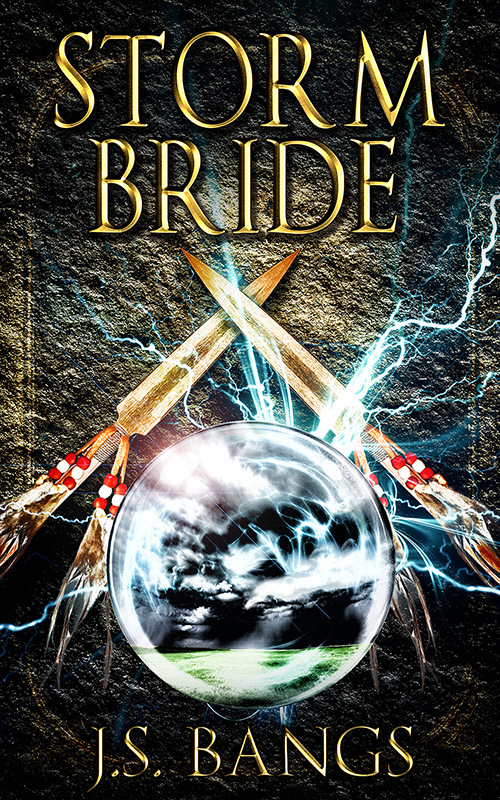
You can get it at any of these fine sellers of e-books:


You can also read the first chapter for free here.
 J.S. Bangs