Camassia explains what I have in common with the early fascists:

They also tend to distrust large-scale economies like capitalism and socialism and have an intermittent romance with a more localist agrarian past, which the early fascists also did. They also like the idea of themselves as an entire alternative society, rather than just an actor within a society. Paxton writes that when Mussolini decided to run for office, the purists of the movement saw this as an unacceptable compromise. “Idealistic early fascists saw themselves as offering a new form of public life — an “antiparty” — capable of gathering the entire nation, in opposition to both parliamentary liberalism, with its encouragement of faction, and socialism, with its class struggle,” he writes.

At Front Porch Republic, taking a look at the myth of religious violence:

The moderns would hold that “religion” is a trans-cultural, trans-historical reality, a universal genus of which “Christianity,” “Hinduism,” and “Islam” are particular species. The problem is, any attempt to define this genus in such a way as to include what the moderns want to include and to exclude what they wish to exclude turns out to be contradictory. Nationalism is no less a cult than Catholicism. Including a belief in God would exclude many major “religions.” One might attempt to limit religion to the “transcendent,” but ideas such as “the nation” or “liberty” are transcendent ideas, as are all values. Hence, there is no coherent way to distinguish “religious” from “secular” violence. What counts as “religious” or “secular” in any given society always depends on the configuration of power within that society. Indeed, the demarcation of the “religious” sphere is itself an expression of secular power, a political act.

Author Marie Brennan on the Monstrous Feminine:

In the case of Alien, it’s the explicitly feminine ship environment, which then violates the boundaries of the symbolic order by turning the tables on the humans: the egg Kane encounters expels a creature both phallic and enveloping, which impregnates him with an alien larva that finally emerges by bursting from his chest, in a horrific and unnatural parody of birth. Phallic features on otherwise feminine bodies are a pretty common horror trope, actually; I could point to Medusa and her snakes, but let me appall some of you by instead bringing up Ursula in the film of The Little Mermaid. By Disney’s standards, she’s grossly sexual (”don’t underestimate the importance of body language!“), and then she’s got those octopus tentacles . . . .

And finally, traditionalist Catholic gadfly Arturo on American and Mexican masculinity:

Mexican masculinity has a lot in common with this. My two prime examples in life for how a Mexican man should behave are my father and grandfather. My father is a mechanic, a Vietnam vet, used to box, and has lots of tattoos: quite masculine to be sure. My grandfather could gut a pig as unpretentiously as most people brush their teeth. My father-in-law, a Louisiana Creole of color from a sharecropper family, can probably do the same, though it has been decades since he lived on the farm. But the odd thing about my grandfather, at least, is that he cooks. You see him sitting at the table, quietly taking small stones out of the pinto beans and placing them in a pot. Women’s work? You can tell him that if you know Spanish. He also likes to sit by my grandmother and watch soap operas with her. I have never seen someone be so tender with someone else.

Update:: One more from John Scalzi about marriage:

Six years ago, when I was giving marriage advice to others, I wrote: “Marriage is work. It never stops being work. It never should.” This is something I still think is true. Human relationships are highly entropic; you have to keep putting energy into them or they fall apart. Marriages are especially entropic because they operate at such a high level of commitment, and yet ironically I think lots of people assume that once achieved, a marriage takes care of itself.
In popular discourse, the word “racist” has a well-defined, narrow meaning. It means, approximately, “Someone who harbors negative beliefs about others that are explicitly based on race.” This form of racism is subject to near-universal condemnation. You have to go very far to the right and even farther to the left to find someone who’s willing to label themselves a racist–popular right-wing figures like Rush Limbaugh and Glenn Beck deploy the word “racist” as a term of abuse against liberals, which demonstrates how universally it’s accepted that racism is bad. Furthermore, this sort of obvious racism is punished with social ostracism or worse. Using the word “nigger” can get you fired from a lot of places–and most people think that it should be that way.

So statements like the following are recognized by almost everyone as racist:

  • All black people are lazy. (Black people are a race, and laziness is a negative characteristic: racism.)
  • The Jews want to destroy America. (The Jews are understood an ethnic group: racism.)

Conversely, the following two statements are not recognized by everyone as racist:

  • All poor people are lazy. (Poor people are not a race: not racism.)
  • The Muslims want to destroy America. (Islam is understood as a religion that comprises multiple ethnicities: not racism.)

In social justice and anti-racist communities, the word “racism” (together with related words like “classism”) is used with a much broader meaning which indicts not only statements like my second two above, but also a broad umbrella of attitudes, preferences, and habits that encode racial privilege. This “racism broadly defined” is a useful construct as well, and it helps bring attention to aspects of the social milieu that are omitted from racism-narrowly-defined. But problems arise when you try to have a dialogue between people holding the narrow definition and people holding the broad definition.

Typically things start going south when Alice the Activist calls something racist-broadly-defined. Bob leaps to its defense, saying that it’s not racism-narrowly-defined. Alice insists that Bob needs to be educated about racism, and Bob claims that Alice is committing slander. Soon they have a shouting match, with Bob being called a bigot and Alice being called a race-baiter, and neither of them learng a damn thing.

Here’s the thing: both Alice and Bob are correct by their respective definitions of racism. Furthermore, since they both believe that their definition is clearly right, they each think of the other as willfully perverse. Bob is angry at Alice for imputing to him loathsome beliefs that he truly does not hold, and Alice is livid over Bob’s refusal to recognize his privilege, which acts for Alice as further proof of the fact that he’s a racist bastard. They have reached a linguistic impasse, which can only be broken if one of them is willing to learn the other’s language.

Ultimately, I think that the initiative to break the impasse has to come from Alice, as much as she may not like it. People interested in social justice are a minority, and if we actually want to persuade (as opposed to merely basking in our own rightness) we have to communicate without our jargon. The dialect of social justice is useful for those already committed to the cause–I’m not suggesting that we abandon it–but when deployed in conversation with others it becomes a stumbling block to understanding, or, worse, an badge separating Us from Them.

There’s no guarantee that this change of language will actually convince Bob, of course. But avoiding the simple kinds of misunderstanding is a decent place to start.

No essay yet. Two reasons:

  1. I have copy-edits on The Taint due in a few days, and I haven’t event started yet.
  2. I’m going to write about Octavia Butler’s Seed to Harvest books, which I haven’t finished reading yet. But that should wrap up at about the same time as the copy-edits, so, you know, Real Soon Now.

In the meantime, you can amuse yourself with this interesting analysis of the construction of gender in gamer nomenclature.

This quote from J.R.R. Tolkein does a great job of illustrating what I was talking about in my essay about fantasy and modernity:

[Family life must have been different] in the days when a family had fed on the produce of the same few miles of country for six generations, and that perhaps was why they saw nymphs in the fountains and dryads in the wood – they were not mistaken for there was in a sense real (not metaphorical) connections between them and the countryside. What had been earth and air and later corn, and later still bread, really was in them. We of course who live on a standardized international diet…are artificial beings and have no connection (save in sentiment) with any place on earth. We are synthetic men, uprooted. The strength of the hills is not ours.

HT: Front Porch Republic.

This month’s essay will be a little late—I’m thinking I’ll actually push it to early June. The reason? I have a mewling little WIP that’s so close to being done, and I want to push to finish it now while it’s got momentum. Essays can wait.

Yesterday I installed Google Chrome on the last of my frequently-used computers, completing my transition away from Firefox. The reasons for this are various, but mostly it came down Firefox being slow and big, especially on my little Ubuntu netbook. As much as I’ve liked FF over the years, I just got tired of it being so greedy for memory and so slow to start up. And the fact that it occasionally pegged the CPU and froze when returning from sleep was just bonus.

This doesn’t mean that I’ve given up on Firefox entirely. In particular, if I ever web development again, Firefox + Firebug remains the platform of choice. But in the meantime, I’m enjoying a browser that only takes 5% of my available memory, rather than 25%.

Sometimes you have an idea for a story, only to find out that someone else has already had the same idea and has done a better job with it than you probably would. In that vein, I give you The Freedom by K M Lawrence. I would feel worse about this if the story weren’t so lovely, and if I hadn’t once read an essay by Orson Scott Card where he complained about the same thing.

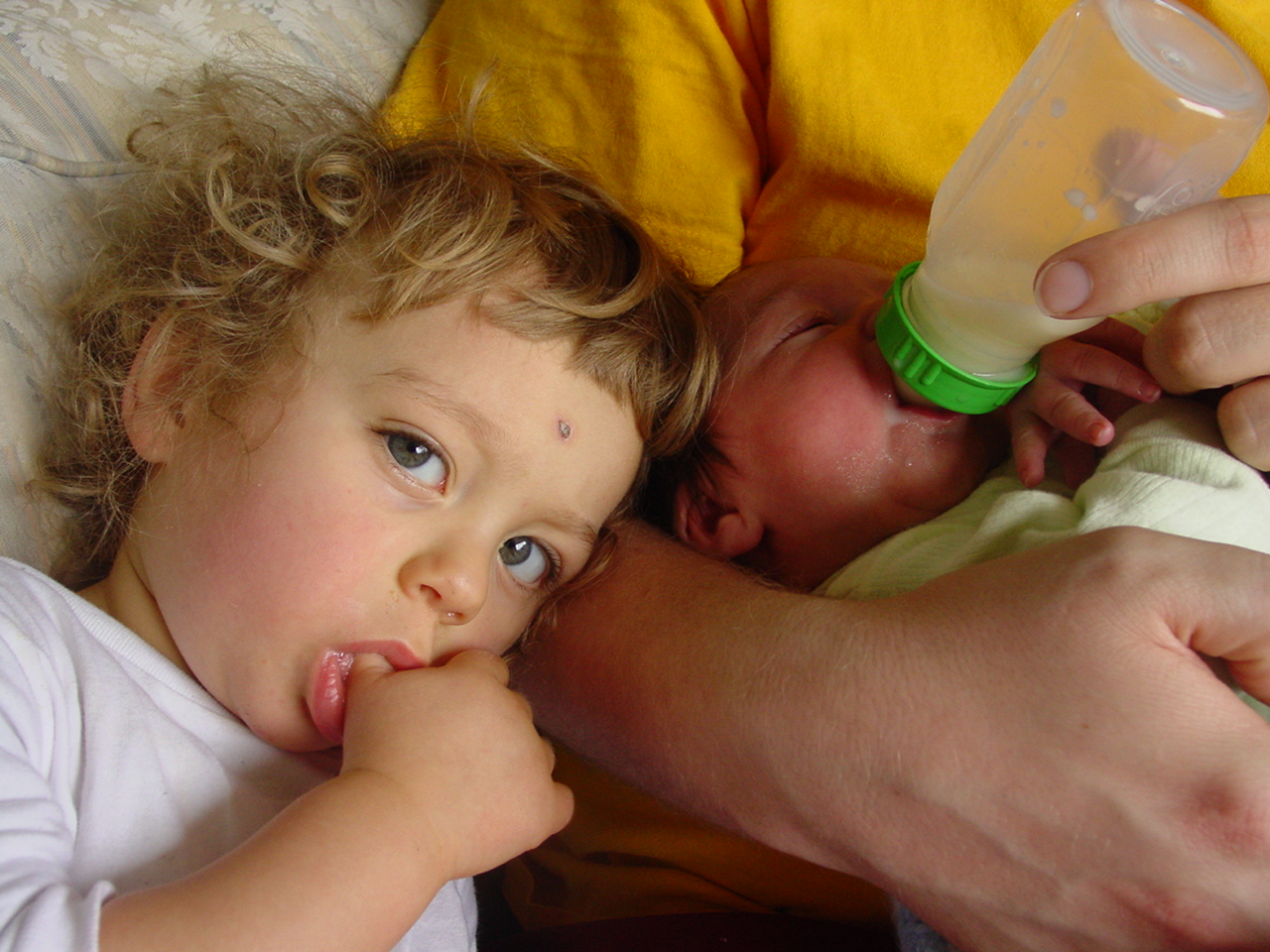
Our first child was a hurricane, an earthquake, a fire-breathing Godzilla kicking over tanks and knocking down buildings in the Tokyo of our pre-parenthood existence. We were aware of this to some extent before the baby was born, and so prepared for it. More accurately, like most parents we obsessed over the approaching Godzilla, learning everything we could about pregnancy, filling out pregnancy calendars with the changes we observed every week, poring over grainy ultrasound images, frequenting motherhood websites and trying on maternity clothes in varying sizes of huge. And when the little monster came belching his first blast of fire, I knew that Tokyo would never be the same again.

Ciprian and Sebastian

The first days after my first son’s birth were pure delirium. I was unable to form any coherent thought unrelated to the baby. I careened between ecstatic highs and bitter heartbreak. When the baby awoke at night to cry, I bounded out of bed, delighted at another chance to see my boy. When I couldn’t get him to stop crying, I plunged into existential despair. Was he sick? Was he going to die? Am I a bad father?

He didn’t die, and he did eventually stop crying. That seemed good enough, so we went for another. And that’s when I discovered that having a second child is nothing at all like having a first child.

In the first place, pregnancy is much more annoying. The first time you are pregnant, everything that happens is new, and so acquires a patina of wonder and magic. Well, assuming that the pregnancy isn’t a miserable death-march. The “morning sickness” that most women complain of is a light and pleasant affliction compared to the six months of all-day gut-wrenching nausea that my wife endured. This was on top of all of the normal inconveniences of pregnancy like peeing every thirty minutes, carrying around thirty extra pounds in your stomach, dealing with lower back pain caused by said pounds, and a peculiar problem that my wife had where she couldn’t be touched at all, by anyone, lest she get an overwhelming feeling of suffocation and claustrophobia. My wife describes pregnancy as the worst thing that ever happened to her. She isn’t joking.

The most difficult part was how few people were willing to sympathize or even listen. Most women have been pregnant, and so they think they know what you’re talking about. “Oh, yes, morning sickness,” they say, nodding and smiling. “Why, I threw up as much as once a day when I was pregnant!” Meanwhile my wife carrying a barf bag with her wherever she went, and counted herself lucky if she only vomited once an hour. This wasn’t helped by the fact that when people actually saw my wife, she often looked fine. She was able to summon superhuman strength from somewhere and pull herself together to go to church or the doctor–and when she couldn’t present a good face she just didn’t go, which meant that most people never saw her except when she seemed okay. I, however, had to deal with the huddling, puking mass she became when she got home, which drove me very close to punching some of those smiley-faced people making light about the problems of pregnancy.

Where was I? Oh, yes, talking about how magical pregnancy is. The ironic thing is that it was still somewhat magical seeing my wife’s belly grow and discovering new and exciting forms of vomit. It was unique and interesting, and regardless of the cost it was a new life being knit together. The second time, however, was much less magical. We hoped that the second gestation would be less brutal than the first, and it was. Maybe 10% easier, which is still 900% worse than most other pregnancies. And the shine of novelty had worn off, meaning that we mostly just wanted the pregnancy to be over so that we could have our baby. There’s no fun in being pregnant for the second time.

Labor for the second child has the undeniable advantage of being fast. For our first child, there were roughly 38 hours from the time we were admitted to the hospital to the time we actually saw our baby. Our second child came out in under 5 hours. I found the second childbirth to be much less stressful than the first, as well. I knew what to expect; I knew when to help and when to get out of the way.

One thing did not change. Nothing could diminish the delight of seeing my second boy for the first time.

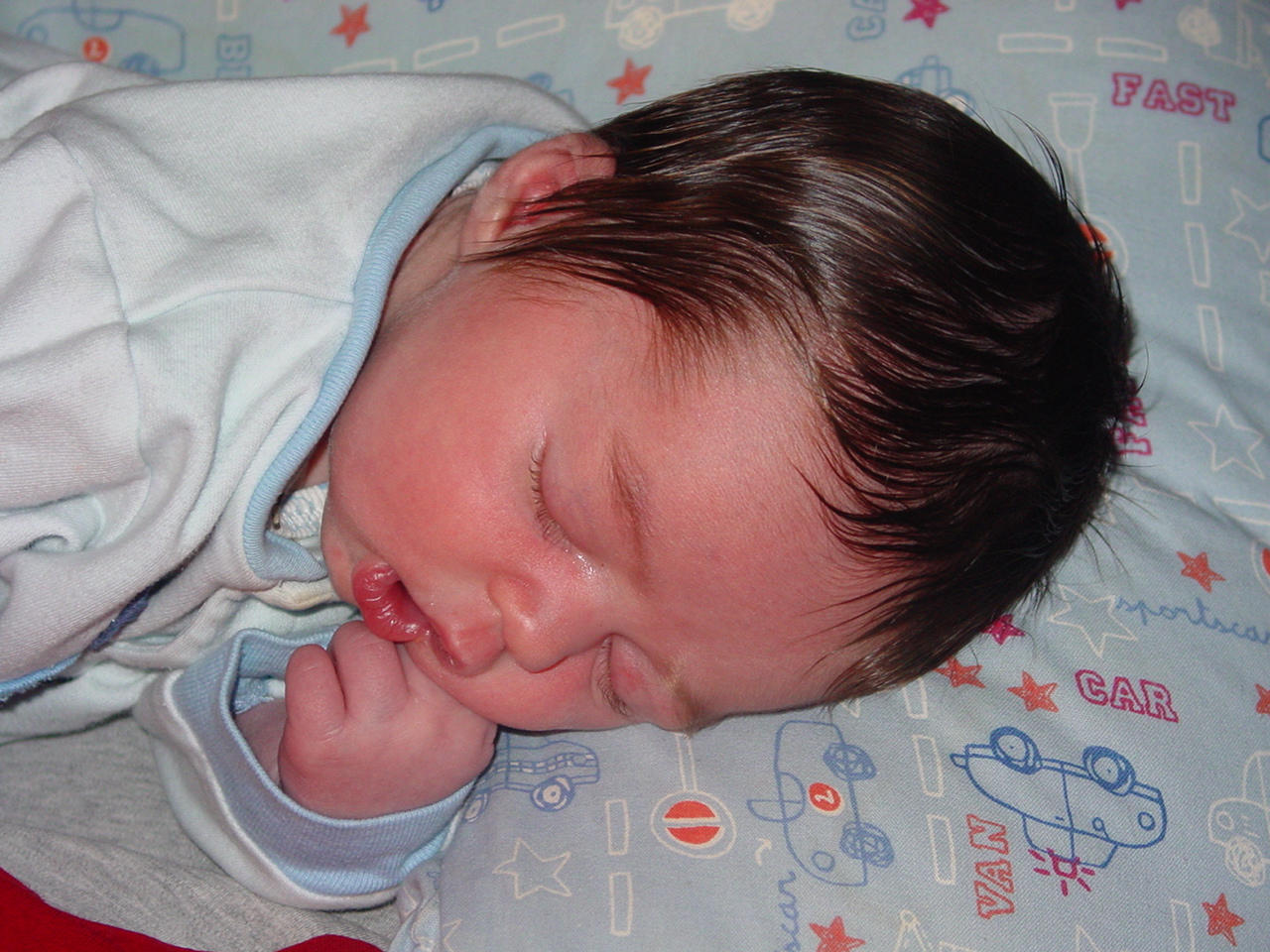
Sebastian sleeping

If preparing for the second child is tedious and routine, bringing the second child home is like falling into a comfortable routine. The heady delirium after our first child was gone, along with the nerves and the panic. In its place is a calm, deep joy. He sleeps like a dream, four hours at a time, leaving me and my wife fabulously well-rested. He nurses with gusto. He poops–boy does he ever poop–but after the problems we had in this area with the first, a steady supply of creamy mustard-brown poop is exactly what we want. He’s dozing next to me right now, one tiny fist held to his face, his big elfin eyes closed, an icon of serenity.

Sebastian Mircea was born April 19, 2010 at 3:43 am. He weighed 8 lbs. 1 oz. and was 21 inches long. He has great hair.

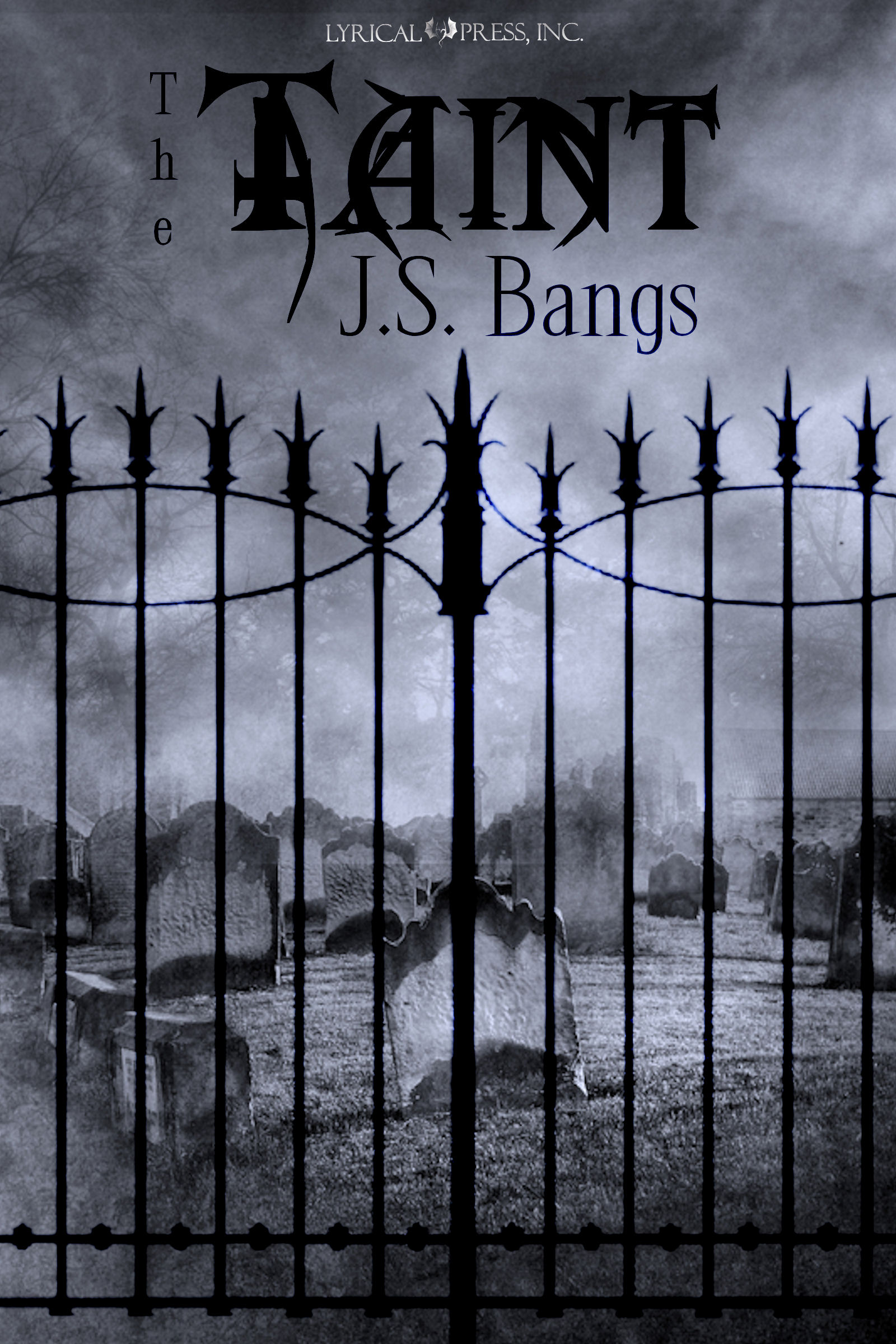
I just got cover of my forthcoming horror novella from the publisher.

Cover for <i>The Taint</i>

I really love the lettering in the title. The graveyard is not precisely as I pictured it (the tomstones should really be wooden crosses), but given the limitations of stock photography, I’m more than happy to live with it.

Publication is expected in August, my editor tells me. More news forthcoming.