I’ve been without internet most of the day today (oh how terrible to be denied all the comforts of civilization!), so I’m late in announcing this. Nonetheless, I’m extremely happy to point out that my story The Last Free Bear is currently up at Heroic Fantasy Quarterly. Due to the aforementioned lack of internet I haven’t gotten to read the rest of the issue yet, but everything on the table of contents looks great.

I know that I’m supposed to say that my stories are like my children and I love them all equally, but… that would be a lie. This is one of my favorites among all of the stories I’ve ever written. In fact, I’m inclined to say that this is my very favorite story in which (spoiler) the protagonist is eaten by a bear.

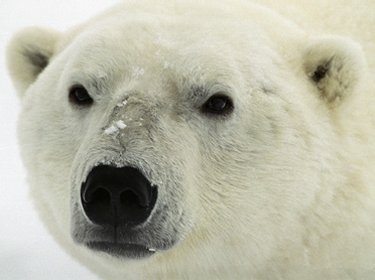
A Polar Bear
Not as nice as she looks.

I hope that all my readers enjoy the Christmas season as much as they do it Catalonia:

Mary, Joseph and the shepherds are all gathered around the baby Jesus in his manger, as loudspeakers emit the occasional animal sound for extra, rustic effect.

But this is Catalonia, and no crib is complete without one additional figure.

He is known in Catalan as the caganer. That translates most politely as ‘the defecator’ – and there he is, squatting under a tree with his trousers down.

At the nearby Christmas market amid the sprigs of holly and Santa hats rows of miniature, crouching country boys are lined up for sale.

Innocuous-looking from the front, their buttocks are bare and each one has a small, brown deposit beneath.

Merry Christmas, everyone!

This was part of a response I got today from an agent who had requested a partial of The Failed Apostle:

[F]rom a market perspective, the SF framework around the low-tech fantasy-like world is a tough sell–you need readers who like both SF and fantasy and the overlap between the genres is surprising small.

I found this to be a surprising statement. Perhaps its because I love a crunchy SF shell around a chewy fantasy center. Perhaps its because many of my favorite books fall into this slot–I’m thinking especially of Gene Wolfe’s Book of the New Sun, and all of LeGuin’s Ekumen novels. I don’t doubt the agent’s judgement of the market–she’s in a much better position to know than I am–but I’m still a little taken aback that this is considered a hard genre to sell.

(It’s also likely that you need to be really good to pull this off, and I suppose that it’s possible I’m not as good as Wolfe or LeGuin yet. I suppose.)

At Three Toed Sloth, a description of the Singularity we’ve already had:

The Singularity has happened; we call it “the industrial revolution” or “the long nineteenth century”. It was over by the close of 1918.

Exponential yet basically unpredictable growth of technology, rendering long-term extrapolation impossible (even when attempted by geniuses)? Check.

Massive, profoundly dis-orienting transformation in the life of humanity, extending to our ecology, mentality and social organization? Check.

Annihilation of the age-old constraints of space and time? Check.

Embrace of the fusion of humanity and machines? Check.

Creation of vast, inhuman distributed systems of information-processing, communication and control, “the coldest of all cold monsters”? Check; we call them “the self-regulating market system” and “modern bureaucracies” (public or private), and they treat men and women, even those whose minds and bodies instantiate them, like straw dogs.

An implacable drive on the part of those networks to expand, to entrain more and more of the world within their own sphere? Check. (“Drive” is the best I can do; words like “agenda” or “purpose” are too anthropomorphic, and fail to acknowledge the radical novely and strangeness of these assemblages, which are not even intelligent, as we experience intelligence, yet ceaselessly calculating.)

Why, then, since the Singularity is so plainly, even intrusively, visible in our past, does science fiction persist in placing a pale mirage of it in our future? Perhaps: the owl of Minerva flies at dusk; and we are in the late afternoon, fitfully dreaming of the half-glimpsed events of the day, waiting for the stars to come out.

I am a skeptic that the nerd rapture, the Singularity, will ever occur in the way imagined by its devotees. I’m also a skeptic of the Singularity we’ve already had–not that I doubt that it occurred, but I doubt whether it was half as inevitable or half as good as its proponents claim.
The ideology of individualism presupposes an “ownership” of the self. But of all the things we can own, the one thing that is excluded is our own self. We cannot own our selves because we cannot seize control of our origins. Each of us is called into being through an act of love, and called into the ready-made community of the family. We receive our being, our name, our language, our culture as pure gifts. And being called into being, we are also called into radical dependency; none of us could have lasted a day without the help of others.

From Front Porch Republic.

The Spirit Catches You and You Fall DownThe Spirit Catches You and You Fall Down by Anne Fadiman
My rating: 5 of 5 stars

This is a beautiful and heartbreaking book. I can’t remember the last time I read a non-fiction book that affected me so deeply.

The core story is of the short life of Lia Lee, a girl born to Hmong refugees shortly after their arrival in the United States. At the age of 3 months she becomes severely epileptic, suffering a series of escalating, life-threatening seizures over the next several years. The true tragedy, though, is not just the epilepsy, but the cultural chasm that prevents her parents and her doctors from treating her effectively. For several months her condition is undiagnosed, because there is no one at the hospital who speaks Hmong and can translate the parents’ concerns. Once her epilepsy is recognized, linguistic and cultural barriers keep her parents from understanding their daughter’s prescriptions and treatments, keep the doctors from understanding the parents’ concerns, and deepen the rifts between the Hmong and immigrant communities.

The author interweaves the story of Lia Lee with a history of the Hmong people, explorations of their culture, and an explanation of how they came to take refuge in the United States in large numbers. The result is a rich and fascinating story that helps place the Lee family in context, and shines a light on the difficulties and tragedies involved in cross-cultural medicine.

View all my reviews