Since therefore all rejoice, I too desire to rejoice. I too wish to share the choral dance, to celebrate the festival. But I take my part, not plucking the harp, not shaking the Thyrsian staff, not with the music of pipes, nor holding a torch, but holding in my arms the cradle of Christ. For this is all my hope, this my life, this my salvation, this my pipe, my harp. And bearing it I come, and having from its power received the gift of speech, I too, with the angels, sing: Glory to God in the Highest; and with the shepherds: and on earth peace to men of good will.

(From the Nativity Homily of St. John Chrysostom)

I’ve been reading George Orwell again. It’s hard to stop: Orwell has to be one of the most winsome and charming writers in the English language, and writing, as he did, in the crucial years of the early 20th century, his writing seems to have permanent relevance, even 75 years later. And he provides a wonderful window into the mindset of the British during WWII, when the outcome was unknown and the stakes seemed enormous. It seems obvious to us now that of course the Germans were going to be defeated and of course the Americans would eventually get into the war, but none of those things were obvious at the time. There’s an atmosphere of sincere alarm in many of the parts from the late 30’s and early 40’s, and it’s quite bracing to read.

But he has his foibles, his socialism which is quite sincere and quite disastrously mistaken. He makes this statement, as part of a long essay about penny dreadfuls:

In a Hollywood film of the Russian Civil War the Whites would probably be angels and the Reds demons. In the Russian version the Reds are angels and the Whites demons. That is also a lie, but, taking the long view, it is a less pernicious lie than the other.

“Taking the long view”? Somehow, I don’t think that the long view of history is judging the Reds Bolsheviks very kindly.

But who care about that? Here’s Orwell on a much more important subject, tea:

Lastly, tea–unless one is drinking it in the Russian style–should be drunk WITHOUT SUGAR. I know very well that I am in a minority here. But still, how can you call yourself a true tea-lover if you destroy the flavour of your tea by putting sugar in it? It would be equally reasonable to put in pepper or salt. Tea is meant to be bitter, just as beer is meant to be bitter. If you sweeten it, you are no longer tasting the tea, you are merely tasting the sugar; you could make a very similar drink by dissolving sugar in plain hot water.

Some people would answer that they don’t like tea in itself, that they only drink it in order to be warmed and stimulated, and they need sugar to take the taste away. To those misguided people I would say: Try drinking tea without sugar for, say, a fortnight and it is very unlikely that you will ever want to ruin your tea by sweetening it again.

And finally, about the habits of a book reviewer:

At about nine p.m. his mind will grow relatively clear, and until the small hours he will sit in a room which grows colder and colder, while the cigarette smoke grows thicker and thicker, skipping expertly through one book after another and laying each down with the final comment, “God, what tripe!” In the morning, blear-eyed, surly and unshaven, he will gaze for an hour or two at a blank sheet of paper until the menacing finger of the clock frightens him into action. Then suddenly he will snap into it. All the stale old phrases–”a book that no one should miss”, “something memorable on every page”, “of special value are the chapters dealing with, etc etc”–will jump into their places like iron filings obeying the magnet, and the review will end up at exactly the right length and with just about three minutes to go. Meanwhile another wad of ill-assorted, unappetising books will have arrived by post. So it goes on. And yet with what high hopes this down-trodden, nerve-racked creature started his career, only a few years ago.

Orwell comments that this description could be generalized, with little modification, to anyone in a literary profession. I’ll make no comment on that.

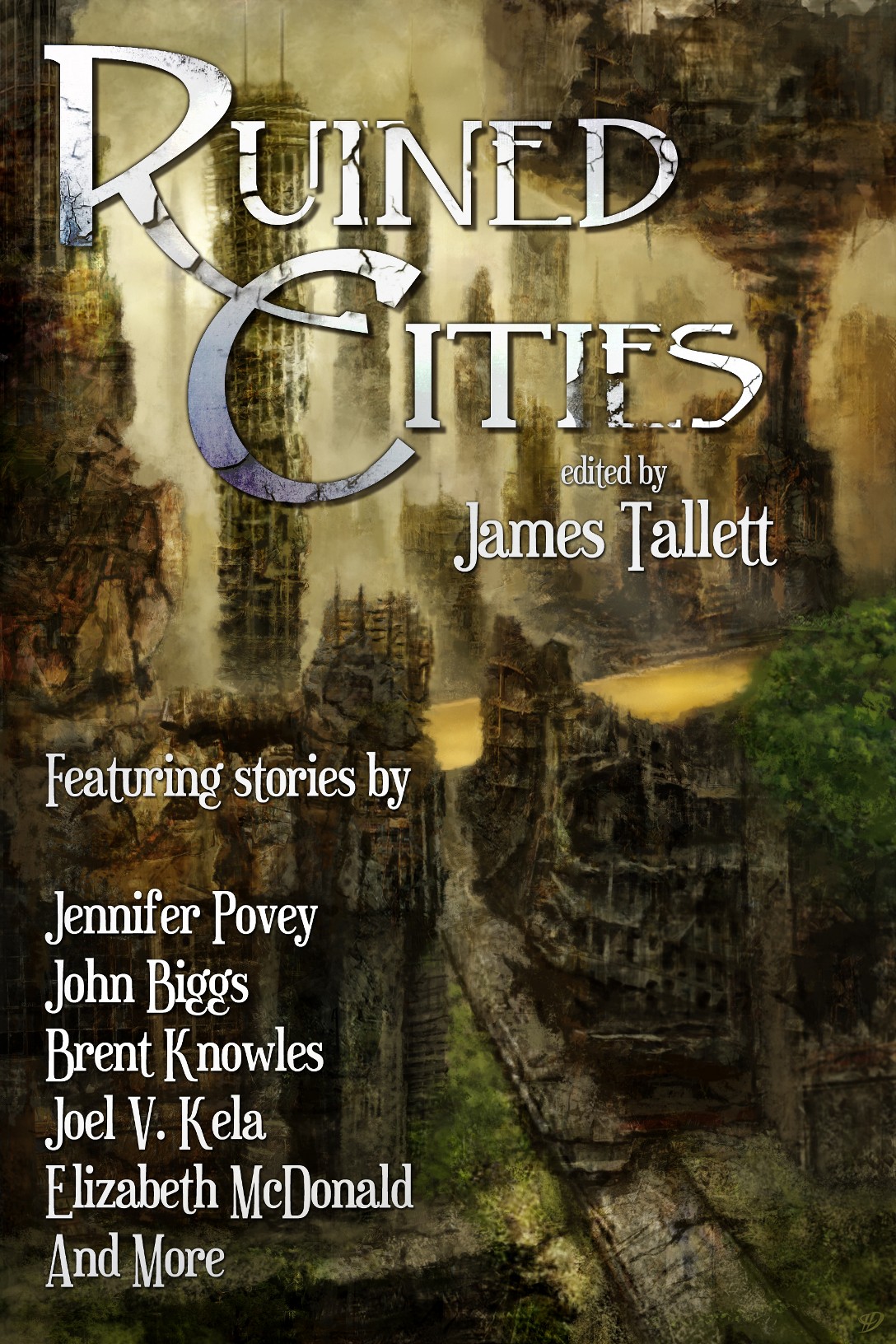
So here’s my big announcement: my fantasy novel The Wedding of Earth and Sky has been sold to Red Adept Publishing, and will appear sometime in 2014.

I’m really excited about this. Red Adept is a small press with a focus on ebooks and audiobooks, and I’ve been very impressed by the quality of their product and the professionalism of their editorial staff. Here’s hoping for big things.

As a result of other changes ’round these parts, I’ve changed the blog theme and the landing page. Now, if you go to jsbangs.com, you’ll see a static landing page highlighting some of my most recent publications, with the blog linked in the sidebar.

The reason is simple: blogging has been sparse for several months, and will probably remain so for the near future. Instead of showing people a handful of very old blog posts, I’d rather show them some stories that I’m proud of and let them click through to the blog if they get curious.

Other big announcements forthcoming…

This Sigur Ros video basically encapsulates the emotional arc that I try for in all of my novels:

We start of quietly and lyrically, move into a long, slow bit of ominous buildup, and end with a fist-pumping, heart-pounding finale that closes with a massive explosion.

Yeah, that’s basically how my novels work. At least, that’s what I’m going for.

Also, note that the song above is 15 minutes long. That’s the pop music equivalent of a 250,000 word fantasy brick. While my novels aren’t quite that prolix, this is the genre that I’m shooting for.

Yesterday I dropped two fat manila envelopes off at the post office for the first time in over a year. Yes, I’m back at it: mailing manuscript pages to editors in the desperate hope that one of them will publish my book. (I’ve done plenty of short-story submissions in the meantime, but not a book, and not on paper.)

Things are a little different this time around. The main difference is that self-publishing is a live option, meaning that I’m so confident in this book that if no publisher takes an interest in it, I’m just going to self-publish. The self-publishing marketplace has matured quite a bit, and I have some practice from last time—so I’m pretty sure that I can make things work if I need to.

The major implication of this is that I’m skipping the agent round. I can get an agent after I have an offer from a big publisher, since it turns out that lots of people get their agents that way, and I don’t feel a big imperative to go through the gatekeepers-before-the-gatekeepers this time. I am subbing directly to all of the houses that accept direct author submissions (and some of the ones that don’t), and I’ll wait around for them to get back to me.

The other major implication is that I’m vetting the small presses that I sub to very carefully. My previous experience with a small e-press, while not exactly a negative experience, has made me realize that there’s not a lot which many small presses can do for me which I can’t do for myself. So I’m very carefully going through the small press candidates and weeding out the ones which don’t offer one or more of:

  1. High-quality professional covers
  2. Print editions
  3. Help with promotion
  4. A non-trivial advance (where “non-trivial” is ~$1000)

These are roughly in order of importance. #1 is absolutely non-negotiable, since a big majority of self-pub and small press covers are terrible. I can pay Streetlight Graphics or a similar outfit to do a professional-quality cover for me, so why should I put up with the garbage that most small presses put out? At least half of the small presses that I’ve looked at have been disqualified with the note “Bad covers”.

A print edition is not something that I’d willing to pay for myself (even using the number of high-quality POD services), but it’s something that I consider a positive if a small press offers it. Promotion likewise is something that I can do by myself, but about which I’m largely clueless, and I’ll take all the help that I can get.

And of course, an advance is something which is by definition impossible under self-publishing, which is why I consider it the least important and least significant element of choosing a publisher.

In any case, I’ve time-boxed this process to take no more than a year. Even the slowest of the traditional publishers should have gotten back to me by that point, and if I haven’t gotten an offer by then, to self-pub I will go.